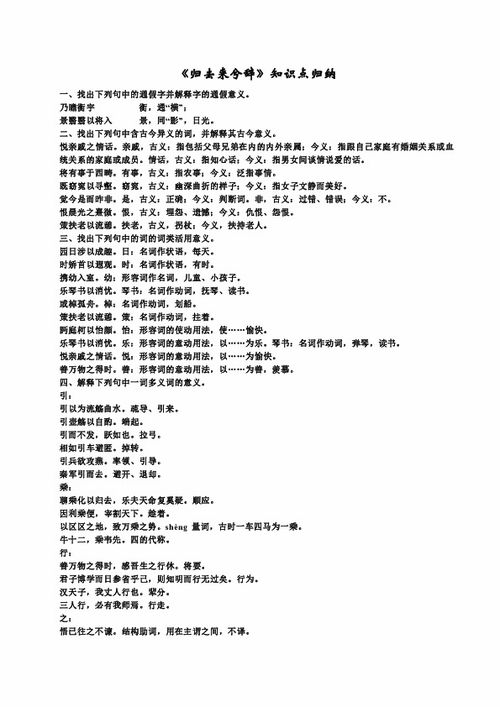
必修五文言文原文
1.人教版语文必修5文言文原文
<归去来兮辞> 归去来兮,田园将芜胡不归!既目以心为形役,奚惆怅而独悲?悟已往之不谏,知来者之可追。
实迷途其未远,觉今是而昨非。舟遥遥以轻飏,风飘飘而吹衣。
问征夫以前路,恨晨光之熹微。 乃瞻衡宇,载欣载奔。
僮仆欢迎,稚子候门。三径就荒,松菊犹存。
携幼入室,有酒盈樽。引壶觞以自酌,眄庭柯以怡颜。
倚南窗以寄傲,审容膝之易安。园日涉以成趣,门虽设而常关。
策扶老以流憩,时矫首而遐观。云无心以出岫,鸟倦飞而知还。
景翳翳以将入,抚孤松而盘桓。 归去来兮,请息交以绝游。
世与我而相违,复驾言兮焉求?悦亲戚之情话,乐琴书以消忧。农人告余以春及,将有事于西畴。
或命巾车,或棹孤舟。既窈窕以寻壑,亦崎岖而经邱。
木欣欣以向荣,泉涓涓而始流。善万物之得时,感吾生之行休。
已矣乎!寓形宇内复几时!曷不委心任去留?胡为乎遑遑欲何之?富贵非吾愿,帝乡不可期。怀良辰以孤往,或植杖而耘耔。
登东皋以舒啸,临清流而赋诗。聊乘化以归尽,乐天天命复奚疑! 《滕王阁序 》 豫章故郡,洪都新府。
星分翼轸,地接衡庐。襟三江而带五湖,控蛮荆而引瓯越。
物华天宝,龙光射牛斗之墟;人杰地灵,徐孺下陈蕃之榻。雄州雾列,俊采星驰。
台隍枕夷夏之交,宾主尽东南之美。都督阎公之雅望,棨戟遥临;宇文新州之懿范,襜帷暂驻。
十旬休假,胜友如云;千里逢迎,高朋满座。腾蛟起凤,孟学士之词宗;紫电青霜,王将军之武库。
家君作宰,路出名区,童子何知,躬逢胜饯。 时维九月,序属三秋。
潦水尽而寒潭清,烟光凝而暮山紫。俨骖騑于上路,访风景于崇阿。
临帝子之长洲,得天人之旧馆。层台耸翠,上出重霄;飞阁翔丹,下临无地。
鹤汀凫渚,穷岛屿之萦回;桂殿兰宫,即冈峦之体势。披绣闼,俯雕甍:山原旷其盈视,川泽纡其骇瞩。
闾阎扑地,钟鸣鼎食之家;舸舰迷津,青雀黄龙之轴。云销雨霁,彩彻区明。
落霞与孤鹜齐飞,秋水共长天一色。渔舟唱晚,响穷彭蠡之滨;雁阵惊寒,声断衡阳之浦。
遥襟甫畅,逸兴遄飞。爽籁发而清风生,纤歌凝而白云遏。
睢园绿竹,气凌彭泽之樽;邺水朱华,光照临川之笔。四美具,二难并。
穷睇眄于中天,极娱游于暇日。天高地迥,觉宇宙之无穷;兴尽悲来,识盈虚之有数。
望长安于日下,目吴会于云间。地势极而南溟深,天柱高而北辰远。
关山难越,谁悲失路之人;沟水相逢,尽是他乡之客。怀帝阍而不见,奉宣室以何年。
嗟乎!时运不齐,命途多舛;冯唐易老,李广难封。屈贾谊于长沙,非无圣主;窜梁鸿于海曲,岂乏明时。
所赖君子见机,达人知命。老当益壮,宁移白首之心;穷且益坚,不坠青云之志。
酌贪泉而觉爽,处涸辙而相欢。北海虽赊,扶摇可接;东隅已逝,桑榆非晚。
孟尝高洁,空余报国之情;阮籍猖狂,岂效穷途之哭! 勃,三尺微命,一介书生。无路请缨,等终军之弱冠;有怀投笔,爱宗悫之长风。
舍簪笏于百龄,奉晨昏于万里。非谢家之宝树,接孟氏之芳邻。
他日趋庭,叨陪鲤对;今兹捧袂,喜托龙门。杨意不逢,抚凌云而自惜;钟期相遇,奏流水以何惭。
呜呼!胜地不常,盛筵难再;兰亭已矣,梓泽丘墟。临别赠言,幸承恩于伟饯;登高作赋,是所望于群公。
敢竭鄙怀,恭疏短引;一言均赋,四韵俱成。请洒潘江,各倾陆海云尔! 《逍遥游》 北冥有鱼,其名为鲲。
鲲之大,不知其几千里也。化而为鸟,其名为鹏。
鹏之背,不知其几千里也,怒而飞,其翼若垂天之云。是鸟也,海运则将徙于南冥。
南冥者,天池也。《齐谐》者,志怪者也。
《谐》之言曰:“鹏之徙于南冥也,水击三千里,抟扶摇而上者九万里,去以六月息者也。”野马也,尘埃也,生物之以息相吹也。
天之苍苍,其正色邪?其远而无所至极邪?其视下也,亦若是则已矣。且夫水之积也不厚,则其负大舟也无力。
覆杯水于坳堂之上,则芥为之舟;置杯焉则胶,水浅而舟大也。风之积也不厚,则其负大翼也无力。
故九万里,则风斯在下矣,面后乃今培风;背负青天而莫之夭阏者,而后乃今将图南。 蜩与学鸠笑之曰:“我决起而飞,抢榆枋而止,时则不至,而控于地而已矣,奚以之九万里而南为?”适莽苍者,三餐而反,腹犹果然;适百里者宿舂粮,适千里者,三月聚粮。
之二虫又何知? 小知不及大知,小年不及大年。奚以知其然也?朝菌不知晦朔,蟪蛄不知春秋,此小年也。
楚之南有冥灵者,以五百岁为春,五百岁为秋。上占有大椿者,以八千岁为春,八千岁为秋。
而彭祖乃今以久特闻,众人匹之。不亦悲平! 汤之问棘也是已:“穷发之北有冥海者,天池也。
有鱼焉,其广数千里,未有知其修者,其名为鲲。有鸟焉,其名为鹏。
背若泰山,翼若垂天之云。抟扶摇羊角而上者九万里,绝云气,负青天,然后图南,且适南冥也。
斥鹅笑之曰:‘彼且奚适也?我腾跃而上,不过数仞而下,翱翔蓬蒿之间,此亦飞之至也。面彼且奚适也?’”此小大之辩也。
故夫知效一官,行比一乡,德合一君而征一国者,其自视也,亦若此矣。而宋荣子犹然笑之。
且举世而誉之而不加劝,举世而非之而不加沮,定乎内外之分,辩乎荣辱之境,斯已矣。彼其于世,未数数然也。
虽然,犹有未树也。
2.高二语文必修五文言文原文
《归去来兮辞》1.悟已往之不谏,知来者之可追.实迷途其未远,觉今是而昨非.2.策扶老以流憩,时矫首而遐观.3.云无心以出岫,鸟倦飞而知还.景翳翳以将入,抚孤松而盘桓.4.悦亲戚之情话,乐琴书以消忧.5.或命巾车,或棹孤舟.既窈窕以寻壑,亦崎岖而经丘.6.木欣欣以向荣,泉涓涓而始流.7.登东皋以舒啸,临清流而赋诗.聊乘化以归尽,乐夫天命复奚疑!《滕王阁序》1、时维九月,序属三秋.潦水尽而寒潭清,烟光凝而暮山紫.2、俨骖騑于上路,访风景于崇阿;临帝子之长洲,得天人之旧馆.3、鹤汀凫渚,穷岛屿之萦回;桂殿兰宫,即冈峦之体势.4、层峦耸翠,上出重霄;飞阁流丹,下临无地.5、闾阎扑地,钟鸣鼎食之家;舸舰弥津,青雀黄龙之舳.6、云销雨霁,彩彻区明.落霞与孤鹜齐飞,秋水共长天一色.7、渔舟唱晚,响穷彭蠡之滨;雁阵惊寒,声断衡阳之浦.(04年天津、全国卷Ⅳ、05年江西高考考题)8、时运不齐,命途多舛!冯唐易老,李广难封.9、老当益壮,宁移白首之心?穷且益坚,不坠青云之志.《逍遥游》1.南冥者,天池也.齐谐者,志怪者也.2.野马也,尘埃也,生物之以息相吹也.3.且夫水之积也不厚,则其负大舟也无力.4.覆杯水于坳堂之上,则芥为之舟;置杯焉则胶,水浅而舟大也.5.风之积也不厚,则其负大翼也无力,故九万里则风斯在下矣.6.适百里者,宿舂粮;适千里者,三月聚粮.7.小知不及大知,小年不及大年.8.故夫知效一官、行比一乡、德合一君、而徵一国者,其自视也亦若此矣.9.若夫乘天地之正,而御六气之辩,以游无穷者,彼且恶乎待哉?故曰:至人无己,神人无功,圣人无名.《陈情表》1、外无期功强近之亲,内无应门五尺之僮.茕茕孑立,形影相吊.2、臣欲奉诏奔驰,则刘病日笃;欲苟顺私情,则告诉不许.3、但以刘日薄西山,气息奄奄,人命危浅,朝不虑夕.4、臣无祖母,无至以今日.祖母无臣,无以终余年.5、臣生当陨首,死当结草.臣不胜犬马怖惧之情,谨拜表以闻.。
3.高二语文必修五文言文原文
《归去来兮辞》1.悟已往之不谏,知来者之可追.实迷途其未远,觉今是而昨非.2.策扶老以流憩,时矫首而遐观.3.云无心以出岫,鸟倦飞而知还.景翳翳以将入,抚孤松而盘桓.4.悦亲戚之情话,乐琴书以消忧.5.或命巾车,或棹孤舟.既窈窕以寻壑,亦崎岖而经丘.6.木欣欣以向荣,泉涓涓而始流.7.登东皋以舒啸,临清流而赋诗.聊乘化以归尽,乐夫天命复奚疑!《滕王阁序》1、时维九月,序属三秋.潦水尽而寒潭清,烟光凝而暮山紫.2、俨骖騑于上路,访风景于崇阿;临帝子之长洲,得天人之旧馆.3、鹤汀凫渚,穷岛屿之萦回;桂殿兰宫,即冈峦之体势.4、层峦耸翠,上出重霄;飞阁流丹,下临无地.5、闾阎扑地,钟鸣鼎食之家;舸舰弥津,青雀黄龙之舳.6、云销雨霁,彩彻区明.落霞与孤鹜齐飞,秋水共长天一色.7、渔舟唱晚,响穷彭蠡之滨;雁阵惊寒,声断衡阳之浦.(04年天津、全国卷Ⅳ、05年江西高考考题)8、时运不齐,命途多舛!冯唐易老,李广难封.9、老当益壮,宁移白首之心?穷且益坚,不坠青云之志.《逍遥游》1.南冥者,天池也.齐谐者,志怪者也.2.野马也,尘埃也,生物之以息相吹也.3.且夫水之积也不厚,则其负大舟也无力.4.覆杯水于坳堂之上,则芥为之舟;置杯焉则胶,水浅而舟大也.5.风之积也不厚,则其负大翼也无力,故九万里则风斯在下矣.6.适百里者,宿舂粮;适千里者,三月聚粮.7.小知不及大知,小年不及大年.8.故夫知效一官、行比一乡、德合一君、而徵一国者,其自视也亦若此矣.9.若夫乘天地之正,而御六气之辩,以游无穷者,彼且恶乎待哉?故曰:至人无己,神人无功,圣人无名.《陈情表》1、外无期功强近之亲,内无应门五尺之僮.茕茕孑立,形影相吊.2、臣欲奉诏奔驰,则刘病日笃;欲苟顺私情,则告诉不许.3、但以刘日薄西山,气息奄奄,人命危浅,朝不虑夕.4、臣无祖母,无至以今日.祖母无臣,无以终余年.5、臣生当陨首,死当结草.臣不胜犬马怖惧之情,谨拜表以闻。
4.人教版高中必修5课文的原文
PUZZLES IN GEOGRAPHY may wonder why different words are used to describe these four countries: England, Wales, Scotland and Northern Ireland. You can clarify this question if you study British history. First there was England. Wales was linked to it in the thirteenth century. Now when people refer to England you find Wales included as well. Next England and Wales were joined to Scotland in the seventeenth century and the name was changed to "Great Britain". Happily this was accomplished without conflict when King James of Scotland became King of England and Wales as well. Finally the English government tried in the early twentieth century to form the United Kingdom by getting Ireland connected in the same peaceful way. However, the southern part of Ireland was unwilling and broke away to form its own government. So only Northern Ireland joined with England, Wales and Scotland to become the United Kingdom and this was shown to the world in a new flag called the Union Jack. To their credit the four countries do work together in some areas (eg, the currency and international relations), but they still have very different institutions. For example, Northern Ireland, England and Scotland have different educational and legal systems as well as different football teams for competitions like the World Cup! England is the largest of the four countries, and for convenience it is divided roughly into three zones. The zone nearest France is called the South of England, the middle zone is called the Midlands and the one nearest to Scotland is known as the North. You find most of the population settled in the south, but most of the industrial cities in the Midlands and the North of England. Although, nationwide, these cities are not as large as those in China, they have world-famous football teams and some of them even have two! It is a pity that the industrial cities built in the nineteenth century do not attract visitors. For historical architecture you have to go to older but smaller towns built by the Romans. There you will find out more about British history and culture. The greatest historical treasure of all is London with its museums, art collections, theatres, parks and buildings. It is the centre of national government and its administration. It has the oldest port built by the Romans in the first century AD, the oldest building begun by the Anglo-Saxons in the 1060s and the oldest castle constructed by later Norman rulers in 1066. There has been four sets of invaders of England. The first invaders, the Romans, left their towns and roads. The second, the Anglo-Saxons, left their language and their government. The third, the Vikings, influenced the vocabulary and place-names of the North of England, and the fourth, the Normans, left castles and introduced new words for food. If you look around the British countryside you will find evidence of all these invaders. You must keep your eyes open if you are going to make your trip to the United Kingdom enjoyable and worthwhile. SIGHTSEEING IN LONDON Worried about the time available, Zhang Pingyu had made a list of the sites she wanted to see in London. Her first delight was going to the Tower. It was built long ago by the Norman invaders of AD 1066. Fancy! This solid stone, square tower had remained standing for one thousand years.Although the buildings had expanded around it, it remained part of a royal palace and prison combined. To her great surprise, Zhang Pingyu found the Queen's jewels guarded by special royal soldiers who, on special occasions, still wore the four-hundred-year-old uniform of the time of Queen Elizabeth I. There followed St Paul's Cathedral built after the terrible fire of London in 1666. It looked splendid when first built! Westminster Abbey, too, was very interesting. It contained statues in memory of dead poets and writers, such as Shakespeare. Then just as she came out of the abbey, Pingyu heard the famous sound of the clock, Big Ben, ringing out the hour. She finished the day by looking at the outside of Buckingham Palace, the Queen's house in London. Oh, she had so much to tell her friends! The second day the girl visited Greenwich and saw its old ships and famous clock that sets the world time. What interested her most was the longitude line. It is an imaginary line dividing the eastern and western halves of the world and is very useful for navigation. It passes through Greenwich, so Pingyu had a photo taken standing on either side of the line. The last day she visited Karl Marx's statue in Highgate Cemetery. It seemed strange that the man who had 。
5.人教版高中必修5课文的原文
PUZZLES IN GEOGRAPHY People may wonder why different words are used to describe these four countries: England, Wales, Scotland and Northern Ireland. You can clarify this question if you study British history. First there was England. Wales was linked to it in the thirteenth century. Now when people refer to England you find Wales included as well. Next England and Wales were joined to Scotland in the seventeenth century and the name was changed to "Great Britain". Happily this was accomplished without conflict when King James of Scotland became King of England and Wales as well. Finally the English government tried in the early twentieth century to form the United Kingdom by getting Ireland connected in the same peaceful way. However, the southern part of Ireland was unwilling and broke away to form its own government. So only Northern Ireland joined with England, Wales and Scotland to become the United Kingdom and this was shown to the world in a new flag called the Union Jack. To their credit the four countries do work together in some areas (eg, the currency and international relations), but they still have very different institutions. For example, Northern Ireland, England and Scotland have different educational and legal systems as well as different football teams for competitions like the World Cup! England is the largest of the four countries, and for convenience it is divided roughly into three zones. The zone nearest France is called the South of England, the middle zone is called the Midlands and the one nearest to Scotland is known as the North. You find most of the population settled in the south, but most of the industrial cities in the Midlands and the North of England. Although, nationwide, these cities are not as large as those in China, they have world-famous football teams and some of them even have two! It is a pity that the industrial cities built in the nineteenth century do not attract visitors. For historical architecture you have to go to older but smaller towns built by the Romans. There you will find out more about British history and culture. The greatest historical treasure of all is London with its museums, art collections, theatres, parks and buildings. It is the centre of national government and its administration. It has the oldest port built by the Romans in the first century AD, the oldest building begun by the Anglo-Saxons in the 1060s and the oldest castle constructed by later Norman rulers in 1066. There has been four sets of invaders of England. The first invaders, the Romans, left their towns and roads. The second, the Anglo-Saxons, left their language and their government. The third, the Vikings, influenced the vocabulary and place-names of the North of England, and the fourth, the Normans, left castles and introduced new words for food. If you look around the British countryside you will find evidence of all these invaders. You must keep your eyes open if you are going to make your trip to the United Kingdom enjoyable and worthwhile. SIGHTSEEING IN LONDON Worried about the time available, Zhang Pingyu had made a list of the sites she wanted to see in London. Her first delight was going to the Tower. It was built long ago by the Norman invaders of AD 1066. Fancy! This solid stone, square tower had remained standing for one thousand years.Although the buildings had expanded around it, it remained part of a royal palace and prison combined. To her great surprise, Zhang Pingyu found the Queen's jewels guarded by special royal soldiers who, on special occasions, still wore the four-hundred-year-old uniform of the time of Queen Elizabeth I. There followed St Paul's Cathedral built after the terrible fire of London in 1666. It looked splendid when first built! Westminster Abbey, too, was very interesting. It contained statues in memory of dead poets and writers, such as Shakespeare. Then just as she came out of the abbey, Pingyu heard the famous sound of the clock, Big Ben, ringing out the hour. She finished the day by looking at the outside of Buckingham Palace, the Queen's house in London. Oh, she had so much to tell her friends! The second day the girl visited Greenwich and saw its old ships and famous clock that sets the world time. What interested her most was the longitude line. It is an imaginary line dividing the eastern and western halves of the world and is very useful for navigation. It passes through Greenwich, so Pingyu had a photo taken standing on either side of the line. The last day she visited Karl Marx's statue in Highgate Cemetery. It seemed strange that the man who had developed communism should have lived and。
6.高二必修五必背文言文
《陈情表》臣密言:臣以险衅,夙遭闵凶,生孩六月,慈父见背,行年四岁,舅夺母志。
祖母刘愍臣孤弱,躬亲抚养。臣少多疾病,九岁不行,零丁孤苦,至于成立。
既无叔伯,终鲜兄弟,门衰祚薄,晚有儿息。外无期功强近之亲,内无应门五尺之僮,茕茕孑立,形影相吊。
而刘夙婴疾病,常在床蓐,臣侍汤药,未曾废离。逮奉圣朝,沐浴清化。
前太守臣逵,察臣孝廉;后刺史臣荣,举臣秀才。臣以供养无主,辞不赴命。
诏书特下,拜臣郎中,寻蒙国恩,除臣洗马。猥以微贱,当侍东宫,非臣陨首所能上报。
臣具以表闻,辞不就职。诏书切峻,责臣逋慢;郡县逼迫,催臣上道;州司临门,急于星火。
臣欲奉诏奔驰,则刘病日笃,欲苟顺私情,则告诉不许。臣之进退,实为狼狈。
伏惟圣朝以孝治天下,凡在故老,犹蒙矜育,况臣孤苦,特为尤甚。且臣少仕伪朝,历职郎署,本图宦达,不矜名节。
今臣亡国贱俘,至微至陋,过蒙拔擢,宠命优渥,岂敢盘桓,有所希冀!但以刘日薄西山,气息奄奄,人命危浅,朝不虑夕。臣无祖母,无以至今日,祖母无臣,无以终余年,祖孙二人,更相为命,是以区区不能废远。
臣密今年四十有四,祖母刘今年九十有六,是臣尽节于陛下之日长,报刘之日短也。乌鸟私情,愿乞终养。
臣之辛苦,非独蜀之人士及二州牧伯所见明知,皇天后土,实所共鉴。愿陛下矜愍愚诚,听臣微志。
庶刘侥幸,保卒余年。臣生当陨首,死当结草。
臣不胜犬马怖惧之情,谨拜表以闻。《逍遥游》北冥有鱼,其名为鲲。
鲲之大,不知其几千里也。化而为鸟,其名为鹏。
鹏之背,不知其几千里也,怒而飞,其翼若垂天之云。是鸟也,海运则将徙于南冥。
南冥者,天池也。《齐谐》者,志怪者也。
《谐》之言曰:“鹏之徙于南冥也,水击三千里,抟扶摇而上者九万里,去以六月息者也。”野马也,尘埃也,生物之以息相吹也。
天之苍苍,其正色邪?其远而无所至极邪?其视下也,亦若是则已矣。且夫水之积也不厚,则其负大舟也无力。
覆杯水于坳堂之上,则芥为之舟;置杯焉则胶,水浅而舟大也。风之积也不厚,则其负大翼也无力。
故九万里,则风斯在下矣,面后乃今培风;背负青天而莫之夭阏者,而后乃今将图南。蜩与学鸠笑之曰:“我决起而飞,抢榆枋而止,时则不至,而控于地而已矣,奚以之九万里而南为?”适莽苍者,三餐而反,腹犹果然;适百里者宿舂粮,适千里者,三月聚粮。
之二虫又何知?小知不及大知,小年不及大年。奚以知其然也?朝菌不知晦朔,蟪蛄不知春秋,此小年也。
楚之南有冥灵者,以五百岁为春,五百岁为秋。上占有大椿者,以八千岁为春,八千岁为秋。
而彭祖乃今以久特闻,众人匹之。不亦悲平!汤之问棘也是已:“穷发之北有冥海者,天池也。
有鱼焉,其广数千里,未有知其修者,其名为鲲。有鸟焉,其名为鹏。
背若泰山,翼若垂天之云。抟扶摇羊角而上者九万里,绝云气,负青天,然后图南,且适南冥也。
斥鹅笑之曰:‘彼且奚适也?我腾跃而上,不过数仞而下,翱翔蓬蒿之间,此亦飞之至也。面彼且奚适也?’”此小大之辩也。
故夫知效一官,行比一乡,德合一君而征一国者,其自视也,亦若此矣。而宋荣子犹然笑之。
且举世而誉之而不加劝,举世而非之而不加沮,定乎内外之分,辩乎荣辱之境,斯已矣。彼其于世,未数数然也。
虽然,犹有未树也。夫列子御风而行,泠然善也。
旬有五日而后反。彼于致福者,未数数然也。
此虽免乎行,犹有所待者也。若夫乘天地之正,而御六气之辩,以游无穷者,彼且恶乎待哉?故曰:至人无己,神人无功,圣人无名。
原文:少卿足下:曩者辱赐书,教以慎于接物,推贤进士为务,意气勤勤恳恳,若望仆不相师用,而流俗人之言。仆非敢如是也。
虽罢驽,亦尝侧闻长者遗风矣。顾自以为身残处秽,动而见尤,欲益反损,是以抑郁而无谁语。
谚曰:“谁为为之?孰令听之?”盖钟子期死,伯牙终身不复鼓琴。何则?士为知己用,女为说己容。
若仆大质已亏缺,虽材怀随、和,行若由、夷,终不可以为荣,适足以发笑而自点耳。书辞宜答,会东从上来,又迫贱事,相见日浅,卒卒无须臾之间得竭指意。
今少卿抱不测之罪,涉旬月,迫季冬,仆又薄从上上雍,恐卒然不可讳。是仆终已不得舒愤懑以晓左右,则长逝者魂魄私恨无穷。
请略陈固陋。阙然不报,幸勿过。
仆闻之,修身者智之府也,爱施者仁之端也,取予者义之符也,耻辱者勇之决也,立名者行之极也。士有此五者,然后可以讬于世,列于君子之林矣。
故祸莫僭于欲利,悲莫痛于伤心,行莫丑于辱先,而诟莫大于宫刑。刑余之人,无所比数,非一世也,所从来远矣。
昔卫灵公与雍渠载,孔子适陈;商鞅因景监见,赵良寒心;同子参乘,爰丝变色;自古而耻之。夫中材之人,事关于宦竖,莫不伤气,况伉慨之士乎!如今朝虽乏人,奈何令刀锯之余荐天下豪隽哉!仆赖先人绪业,得待罪辇毂下,二十余年矣。
所以自惟:上之,不能纳忠效信,有奇策材力之誉,自结明主;次之,又不能拾遗补阙,招贤进能,显岩穴之士;外之,不能备行伍,攻城〔野战〕,有斩将搴旗之功;下之,不能累日积劳,取尊官厚禄,以为宗族交游光宠。
7.跪求人教版语文必修5文言文
1 归去来兮辞 并序 余家贫,耕植不足以自给。
幼稚盈室,瓶无储粟,生生所资,未见其术。亲故多劝余为长吏,脱然有怀,求之靡途。
会有四方之事,诸侯以惠爱为德,家叔以余贫苦,遂见用为小邑。于时风波未静,心惮远役,彭泽去家百里,公田之利,足以为酒,故便求之。
及少日,眷然有归欤之情。何则?质性自然,非矫励所得。
饥冻虽切,违己交病。尝从人事,皆口腹自役。
于是怅然慷慨,深愧平生之志。犹望一稔,当敛裳宵逝。
寻程氏妹丧于武昌,情在骏奔,自免去职。仲秋至冬,在官八十馀日。
因事顺心,命篇曰《归去来兮》。乙巳岁十一月也。
归去来兮,田园将芜胡不归?既自以心为形役,奚惆怅而独悲!悟已往之不谏,知来者之可追;实迷途其未远,觉今是而昨非。舟遥遥以轻飏,风飘飘而吹衣。
问征夫以前路,恨晨光之熹微。 乃瞻衡宇,载欣载奔。
僮仆欢迎,稚子候门。三径就荒,松菊犹存。
携幼入室,有酒盈樽。引壶觞以自酌,眄庭柯以怡颜。
倚南窗以寄傲,审容膝之易安。园日涉以成趣,门虽设而常关。
策扶老以流憩,时矫首而遐观。云无心以出岫,鸟倦飞而知还。
景翳翳以将入,扶孤松而盘垣。 归去来兮,请息交以绝游。
世与我而相违,复驾言兮焉求?悦亲戚之情话,乐琴书以消忧。农人告余以春及,将有事于西畴。
或命巾车,或棹孤舟。既窈窕以寻壑,亦崎岖而经丘。
木欣欣以向荣,泉涓涓而始流。善万物之得时,感吾生之行休。
已矣乎!寓形宇内复几时,曷不委心任去留?胡为乎遑遑欲何之?富贵非吾愿,帝乡不可期。怀良辰以孤往,或植杖而耘耔。
登东皋以舒啸,临清流而赋诗。聊乘化以归尽,乐夫天命复奚疑! 译文:序 我家贫穷,种田不能够自给。
孩子很多,米缸里没有存粮,维持生活所需的一切,没有办法解决。亲友大都劝我去做官,我心里也有这个念头,可是求官缺少门路。
正赶上有奉使外出的关使,地方大吏以爱惜人才为美德,叔父也因为我家境贫苦(替我设法),我就被委任到小县做官。那时社会上动荡不安,心里惧怕到远地当官。
彭泽县离家一百里,公田收获的粮食,足够造酒饮用,所以就请求去那里。等到过了一些日子,便产生了留恋故园的怀乡感情。
那是为什么?本性任其自然,这是勉强不得的;饥寒虽然来得急迫,但是违背本意去做官,身心都感痛苦。过去为官做事,都是为了吃饭而役使自己。
于是惆怅感慨,深深有愧于平生的志愿。仍然希望任职一年,便收拾行装连夜离去。
不久,嫁到程家的妹妹在武昌去世,去吊丧的心情像骏马奔驰一样急迫,自己请求免去官职。自立秋第二个月到冬天,在职共80多天。
因辞官而顺遂了心愿,写了一篇文章,题目叫《归去来兮》。这时候正是乙巳年(晋安帝义熙元年)十一月。
正文 回家去吧!田园快要荒芜了,为什么不回去呢?既然自己的心灵为形体所役使,为什么如此失意而独自伤悲?我悔悟过去的错误不可挽救,但坚信未来的岁月中可以补追。实际上我入迷途还不算远,已觉悟到回家为是而做官为非。
船在水上轻轻飘荡,微风吹拂着衣裳。向行人打听前面的路,只恨晨光朦胧天不亮。
终于看到自己简陋的家门,我高兴地向前飞奔。家僮欢快地迎接,幼儿们守候在门庭。
院里的小路长满了荒草,松和菊还是原样;带着幼儿们进了屋,美酒已经满觞。我端起酒壶酒杯自斟自饮,观赏着庭树使我开颜;倚着南窗寄托我的傲世之情,(更)觉得这狭小之地容易使我心安。
小园的门经常地关闭着,每天(独自)在园中散步兴味无穷;拄着拐杖走走歇歇,时时抬头望着远方(的天空)。白云自然而然地从山穴里飘浮而出,倦飞的小鸟也知道飞回巢中;日光暗淡,即将落山,我流连不忍离去,手抚着孤松。
回来呀!我要跟世俗之人断绝交游。他们的一切都跟我的志趣不合,再驾车出去又有何求?跟乡里故人谈心何等可乐,弹琴读书来将愁颜破;农夫告诉我春天到了,将要去西边的田地耕作。
有时驾着巾车,有时划着孤舟,既要探寻那幽深的沟壑,又要走过那高低不平的山丘。树木欣欣向荣,泉水缓缓流动,我羡慕万物各得其时,感叹自己一生行将告终。
算了吧!寄身世上还有多少时光,为什么不按照自己心意或去或留?为什么心神不定还想去什么地方?富贵不是我所求,升入仙界也没有希望。爱惜那良辰美景我独自去欣赏,要不就扶杖除草助苗长;登上东边山坡我放声长啸,傍着清清的溪流把诗歌吟唱;姑且顺应造化了结一生,以天命为乐,还有什么犹豫彷徨? 2 滕王阁序 初唐 王勃 豫章故郡,洪都新府。
星分翼轸(zhěn),地接衡庐。襟三江而带五湖,控蛮荆而引瓯(ōu)越。
物华天宝,龙光射牛斗之墟;人杰地灵,徐孺下陈蕃(fān)之榻(tà)。雄州雾列,俊采星驰,台隍(huáng)枕夷夏之交,宾主尽东南之美。
都督阎公之雅望,棨(qǐ )戟(jǐ)遥临;宇文新州之懿(yì)范,襜(chān )帷(wéi)暂驻。十旬休假,胜友如云;千里逢迎,高朋满座。
腾蛟起凤,孟学士之词宗;紫电青霜,王将军之武库。家君作宰,路出名区;童子何知,躬逢胜饯。
时维九月,序属三秋。潦(lǎo)水尽而寒潭清,烟光凝(níng)而暮山紫。
俨(yǎn)骖騑(cān fēi。